


Mykhailo Kushnir
Founder & CTO at DestiLabs
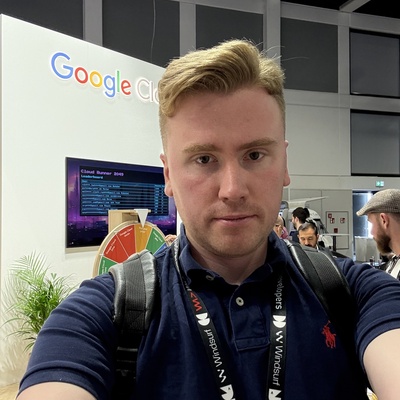
Mykhailo Kushnir is the founder and CTO of DestiLabs, a software agency that builds AI-powered products and internal tools for clients across healthcare, fintech, and e-commerce. With deep expertise in Python, cloud infrastructure, and AI/ML systems, he has shipped production systems ranging from voice AI assistants to GPU-accelerated image processing pipelines.
At DestiLabs, Mykhailo has built a comprehensive AI operations layer that connects 17+ business tools through Claude Code and MCP (Model Context Protocol), turning conversational AI into the primary interface for managing client projects, finances, hiring, and growth. He writes about AI infrastructure, agency operations, and the economics of building vs buying AI platforms on LinkedIn.
Previously, he led engineering teams building scalable backend systems and data pipelines. He is based in Lisbon, Portugal and works with clients across Europe and North America.
Inside a Real-Time Voice Agent: The Sub-Second Latency Budget and How to Defend It
Most AI features can hide a slow response behind a spinner. A voice agent cannot: a reply that arrives a beat late feels broken, so the whole pipeline must fit inside a roughly one-second budget.
This session opens up a self-hosted voice agent on a provider-swappable pipeline (speech-to-text, an LLM, text-to-speech, over LiveKit and Twilio) and treats latency as the design problem it is.
Where the time goes: STT finalization, LLM time-to-first-token, TTS time-to-first-audio, network and telephony. The three techniques that bought back the most time without changing the model: pre-warming STT and TTS connections, routing predictable turns down static paths that skip the LLM, and caching the stable prompt prefix.
And the decisions that outlast any model: keeping each layer swappable, and knowing when to drop the cascaded pipeline for a speech-to-speech model.
You leave able to budget, measure, and defend the latency of a real-time AI feature.